What is PCF?
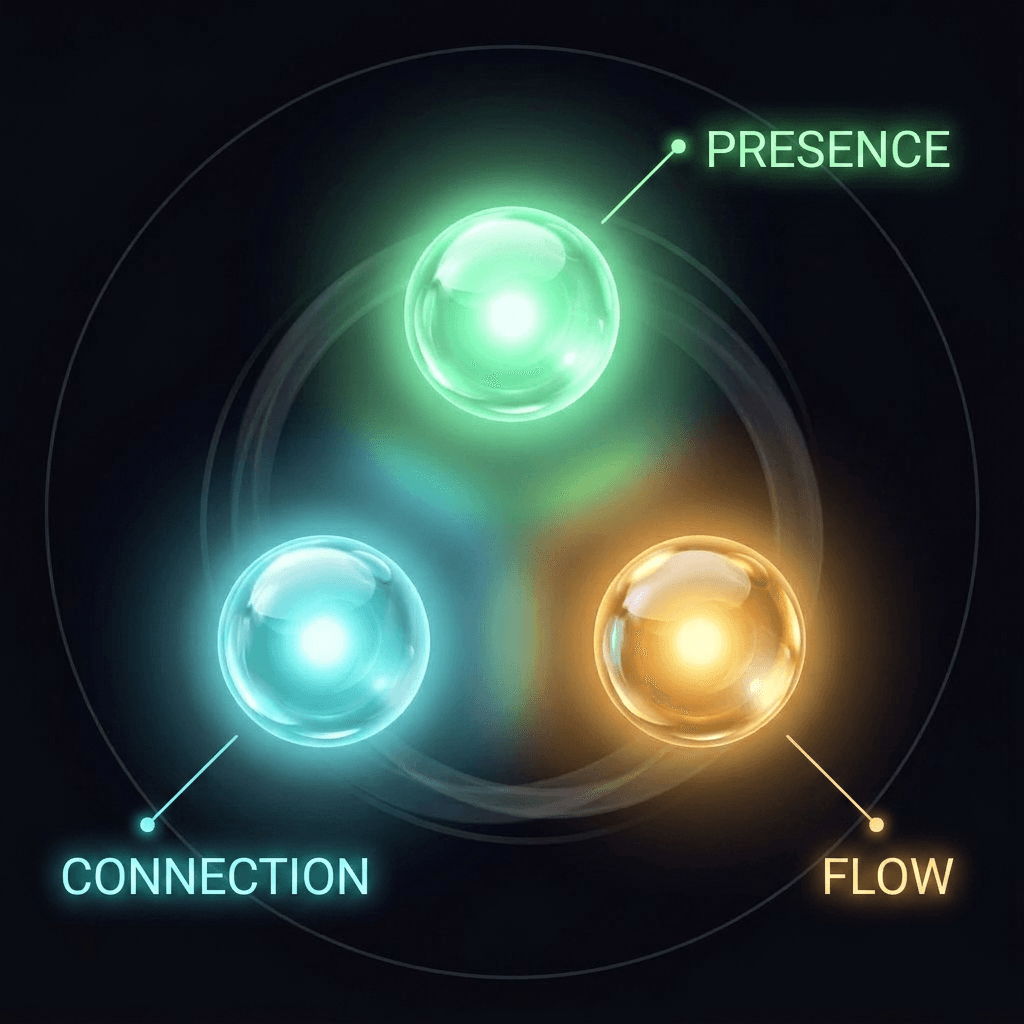
PCF is the structural diagnostic we use in consulting engagements. The letters stand for Presence, Connection, and Flow: the three things you have to look at together to see how an organization is actually structured.
A team can have capable people, a sound strategy, adequate resources, and leadership paying attention, and still keep missing its goals.
Everyone has a theory. Goals are too aggressive. The team needs different tools. There's a communication problem. Someone should be replaced. Each theory leads to a fix. Each fix either doesn't work or works briefly and reverts.
That pattern is the signature of a structural issue. The symptoms are visible. The cause is somewhere else in the structure, often somewhere not visible from inside the team.
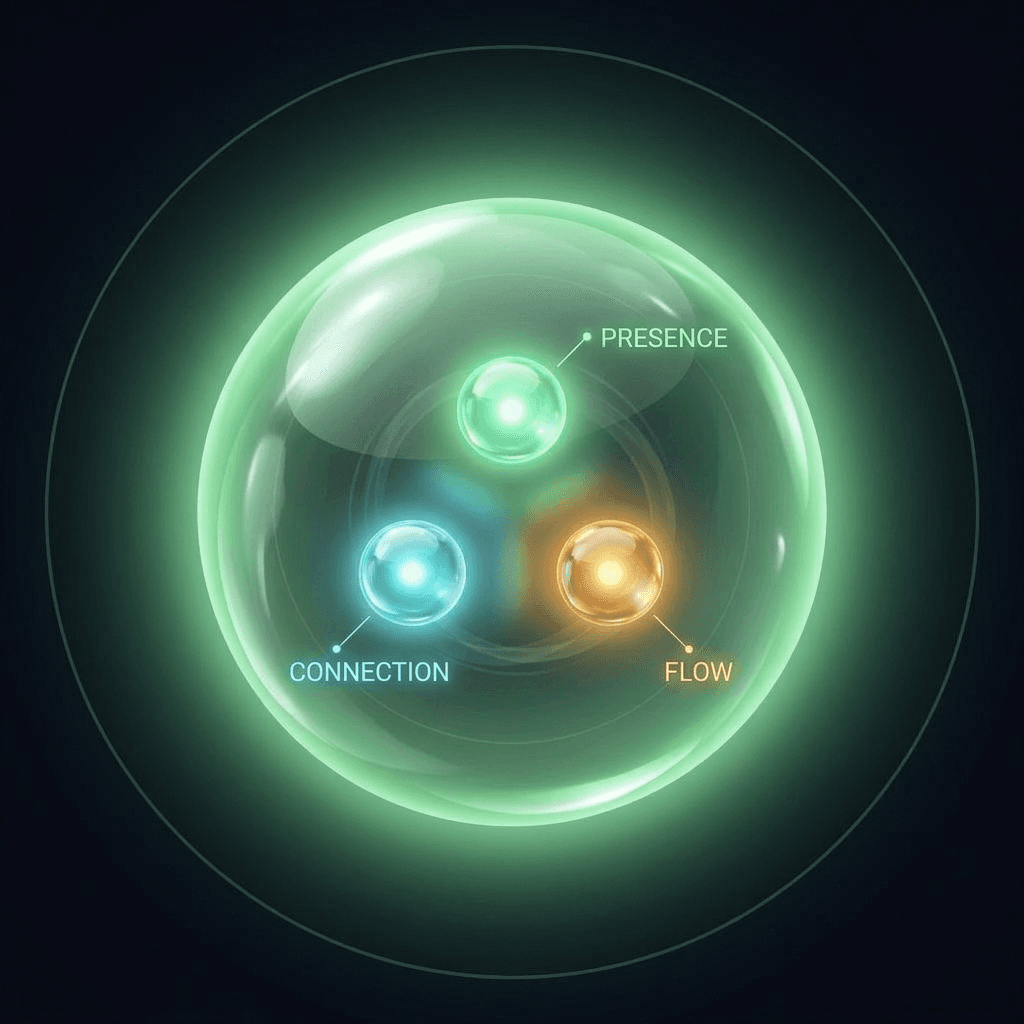
A presence is a bounded entity whose internal structure is the three-axis grammar.
Presence
Presence is what the team is. Its identity, the character of its work, who belongs in it, what would still be recognizable about it even if many specific details changed.
When Presence is clear and strong, a team can absorb considerable change without losing itself. When Presence is confused or thin, every change threatens identity, which makes substantial change difficult even when it's clearly needed.
Connection
Connection is how the team composes, both internally and within its larger context. Internally: who works with whom, where decisions actually get made, what information crosses which boundaries. Externally: how the team sits inside the rest of the organization, what it depends on, what depends on it.
Connection covers both the formal structure (reporting lines, the org chart) and the actual relational field (the paths information takes in practice, the collaborations that happen off the chart). Organizations often have strong formal Connection and weak actual Connection, or vice versa.
Flow
Flow is how energy moves through the team. Work, information, decisions, attention, and the weight of unfinished things are all flowing all the time. Flow is how that movement behaves: where it passes through cleanly, where it stalls, where it loops, where it accumulates without releasing.
A team with strong Flow is often unremarkable from the outside. A team with broken Flow can look very busy without producing much, because the motion is in the stalls and loops rather than in the throughput.
The three axes are mutually constitutive. None of them stands alone.
Presence without Connection cannot persist. A team with strong identity but no real relational structure eventually dissolves, because identity requires relationship to hold.
Connection without Presence has nothing to relate. A team with rich relational activity but no clear identity spends its energy managing relationships instead of doing work.
Flow without Presence and Connection has nowhere to go. A team trying to push work through when identity is unclear or relational structure is broken produces frustration rather than throughput.
In practice: most stuck organizations show a symptom in one axis but have a cause in another. A team that appears to have a Flow problem (work keeps getting dropped) often has a Connection problem (it's positioned in the organization in a way that makes clean work collection structurally impossible), grounded in a Presence problem (the team's actual identity doesn't match how the organization is treating it).
Fix only the visible symptom, and the symptom returns. Fix the structural source, and the symptom resolves along with several others you weren't specifically trying to address.
Teams are not primitive units. A team is made of individuals, and individuals have their own PCF.
A person's Presence is who they are in the work: what they bring, what they care about, what persists about them across projects and pressure. Their Connection is how they relate to others on the team and outside it. Their Flow is how work and attention move through them, what they pick up cleanly, what gets stuck in them, what they pass on well.
Team Presence emerges when individual Presences are clear and compose into something the team can hold as its own identity. Team Connection emerges when the relationships between individuals synergize: each person's relational character reinforcing the structure the team needs, rather than undermining it. Team Flow emerges when individual Flows align enough that work moves through the team cleanly, rather than getting stuck in one person's bottleneck or lost across a handoff.
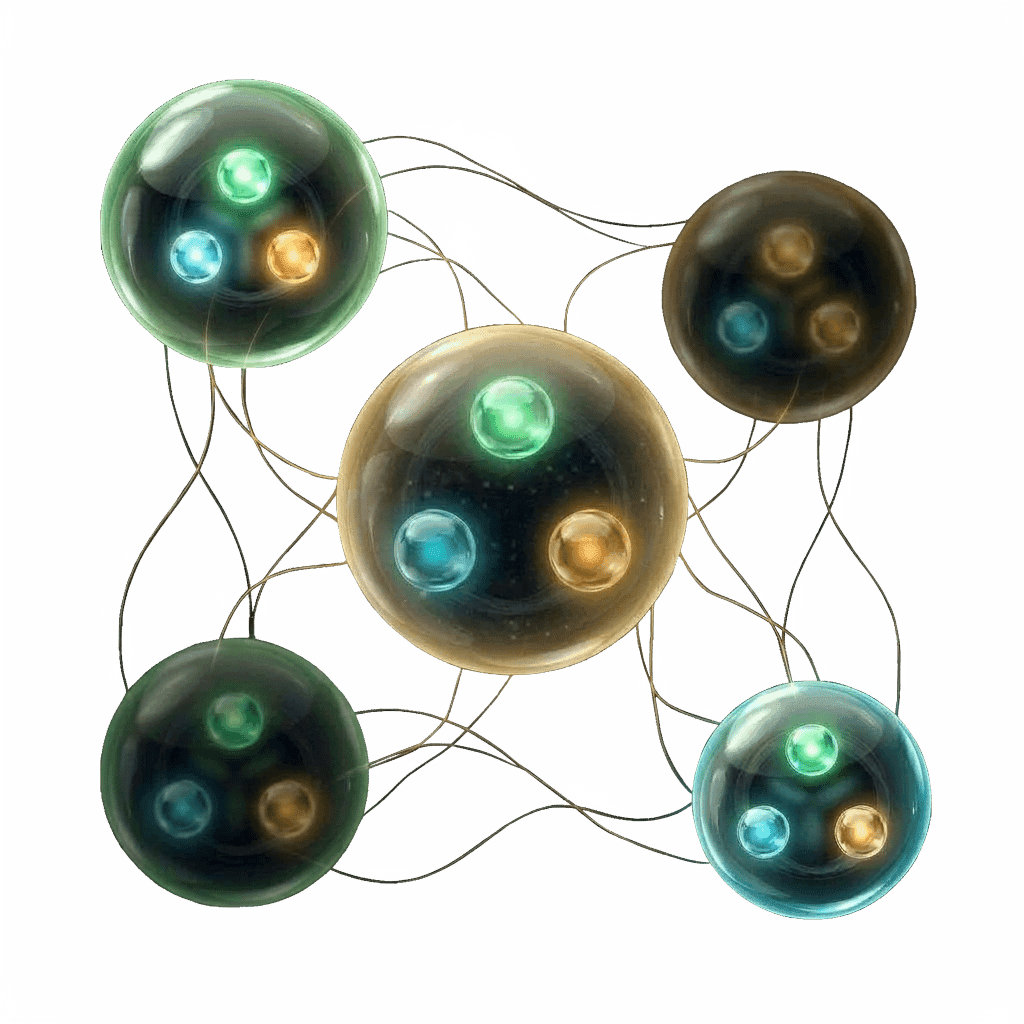
When this composition is strong, the team becomes more coherent than the individuals would be separately. Synergy is a composition result. When the individuals' PCFs reinforce each other, the team's PCF strengthens beyond what any of them carries alone.
When the composition is weak, the opposite holds. A single individual carrying confused Presence, broken Connection, or stuck Flow can disrupt the entire team, because a team is a composition and compositions transmit structure. A stressed sub-structure propagates through the connections that bind the whole.
This is why one team member can break a team, and why changing one member can sometimes restore it. The grammar is recursive. PCF at one scale is composed of PCF at the scale below, and coherence (or its failure) moves between scales through the same Connection and Flow that structures each level.
A nine-cell diagnostic grid. Each axis examined at three scales.
Local — the organization as it currently is, in its specific present form.
Integrative — the full interior of the organization: teams, processes, cultural patterns, sub-systems.
Nonlocal — the archetypal character of what this kind of organization is, independent of the specific instance.
Example read, illustrative only.
Each cell asks a different diagnostic question. Presence × Local asks what this organization currently is. Presence × Nonlocal asks about the archetypal character of what this kind of organization is, separate from how it's presently instantiated. A consulting engagement reads every cell. The report names where the structure is coherent, where it's stressed, and where it's fractured, and shows how the cells relate to each other in producing the organization's current shape.
PCF was developed across decades of consulting and systems engineering, refined through engagements across industries and organization types. It's formalized through Coherence Research, which publishes the structural standards as open specifications. Foundry applies them in engagements.
The same composition holds upward. A team composes from individuals. An organization composes from teams. An industry composes from organizations. An ecosystem composes from industries. At every scale, the three axes describe how the composition holds or doesn't, and coherence at any scale depends on coherence at the scales below and around it.
PCF was developed for organizations, and that's where Foundry primarily uses it. The grammar also applies to any other persisting system: software, communication, products, ecosystems, individuals. Organizations are one place where it speaks especially clearly, because they're made of people who can describe from the inside what the structure feels like.
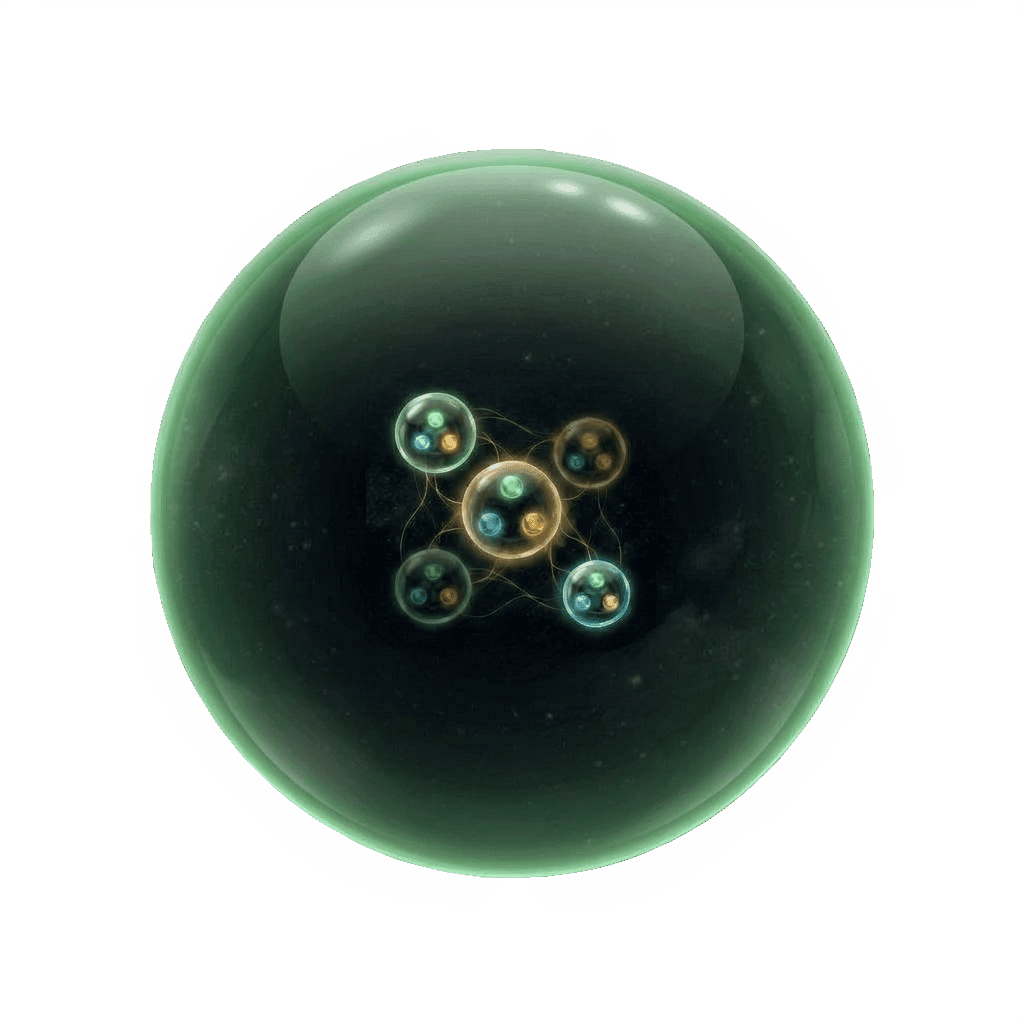
The pattern is fractal. At every scale, a presence is a bounded entity whose internals are the same grammar.
Run into the same problem over and over?
Tell us the challenge you’re stuck on. We’ll read the structure underneath.